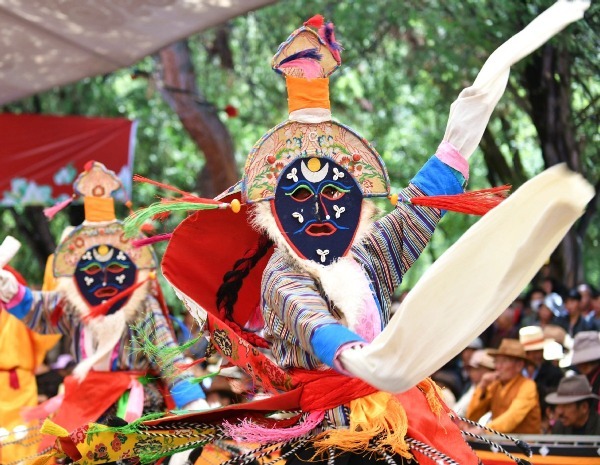
Tibetan Opera
Overview
Tibetan Opera, also known as "Ache Lhamo" in Tibetan, is one of the most celebrated traditional operas among the ethnic groups in China. It is a multifaceted art form that intricately weaves together elements of folk song, dance, storytelling, chant, acrobatics and religious performance. Predominantly performed on the Qinghai-Tibet Plateau in western China, Tibetan Opera is not merely an entertainment medium but also a cultural bridge that connects Tibetans across different regions, fostering ethnic unity and pride.
Recognized as an Intangible Cultural Heritage by UNESCO in 2009, it plays a significant role in preserving the Tibetan language, traditions, and customs.
History
With a history spanning over 600 years, Tibetan Opera is revered as a "living fossil" of Tibetan culture. Its origins can be traced back to the 14th century. The traditional art form is deeply rooted in Buddhist teachings, with many stories depicting the triumph of good over evil, serving an educational purpose for the community. The opera reflects the rich spiritual and cultural heritage of Tibet, offering insights into the Tibetan worldview and morality.
Performance Elements
A Tibetan Opera performance typically begins and ends with a prayer ceremony, involving stage cleansing rituals by hunters and blessings by elders. The core of the opera is a drama narrated by a single speaker, enacted by performers, and supported by singers, dancers and acrobats. Performers don traditional masks, which come in various shapes and colors, contrasting with their simple makeup. Such masks are vital in portraying different characters and conveying the story's emotional depth.
Traditionally, the opera is performed in open spaces such as public squares, temples, or threshing floors, with the central stage area marked by a tree wrapped in colorful paper. The surroundings are adorned with purified water and theatrical props. Costumes are vibrant and elaborate, embodying the essence of Tibetan attire. The performers' outfits and masks are not only symbolic but also enhance the visual appeal of the opera.
Modern Development
Despite challenges in modern times, Tibetan Opera has seen a resurgence with contemporary presentations. Efforts to protect and promote the genre have been intensified, with government support and the establishment of Tibetan Opera troupes. Modern technologies and digital marketing have been employed to reach a wider audience and adapt the opera to contemporary tastes. This has led to the creation of new shows and increased public interest.
Tibetan Opera is a highlight of the annual Shoton Festival, drawing tourists and locals to Lhasa. The festival features performances in parks such as Dzongyab Lukhang and Norbu Lingka, where audiences enjoy the opera amidst picnics and gatherings. The Chokor Tse Tibetan Opera Troupe, among others, has played a crucial role in keeping the tradition alive, performing during key festivals throughout the year. Article reference1. Tibetan Opera sings through the ages. chinadaily.com.cn. 20192. Tibetan Museum for Intangible Cultural Heritage to open 2nd half of 2018. chinadaily.com.cn. 20183. Tibetan Opera Troupe marks 60th anniversary with innovative performance. chinadaily.com.cn. 2020Photo Gallery(12 pictures)CategoriesCultural HeritageTagIntangible Cultural Heritage of Humanity in ChinaIntangible Cultural HeritageOpera and DramaRelatedTibetan Mask MakingGesar Epic TraditionThe City of Sunlight (TV Drama)The Epic of King GesarCatalogue1. Overview2. History3. Performance Elements4. Modern Development- - - []








